Forget fancy restaurants and white tablecloths. My most unforgettable Filipino food experience happened on my very first day in Manila in the Philippines, knee-deep in the chaotic, exhilarating world of Manila’s Dampa Seaside Market.
What’s a Dampa?
For the uninitiated, “dampa” translates roughly to “shack” or “hut,” but that humble name undersells what’s actually happening here. This is paluto dining—the Filipino practice of buying fresh seafood from wet market vendors and having it cooked to order at nearby restaurants. It’s raw, immediate, and about as far from a controlled restaurant experience as you can get while still technically eating at a restaurant.
When people search for “dampa near me” or ask about the best paluto in Dampa Macapagal, they’re usually looking for recommendations on which specific restaurant to trust with their seafood. The truth? The magic isn’t in finding one perfect vendor. It’s in understanding how the whole system works and being willing to experience it.
The Dampa Macapagal Setup
Dampa Macapagal (also called Dampa Seaside Market) operates on a simple principle: seafood vendors line the market with the day’s catch—glistening fish of all shapes and sizes, vibrant crabs and lobsters snapping their claws, shellfish so fresh they’re still spitting out seawater, and exotic sea creatures you never knew existed. First, you point, you negotiate dampa prices, you buy. Then you walk twenty feet to one of the dampa restaurants lining the market, places like Paluto by Trinity, Kaymig Seafood Grill, Ocean Bay Seafood House, or many others competing for your business.
This isn’t for the faint of heart. The sights, smells, and sounds are an assault on the senses in the best possible way. Fish guts on the floor. Vendors shouting prices. The smell of the sea mixing with charcoal smoke from nearby grills. Live crabs trying to escape plastic baskets. It’s chaos, and it’s glorious.
How We Did It: Paluto by Trinity
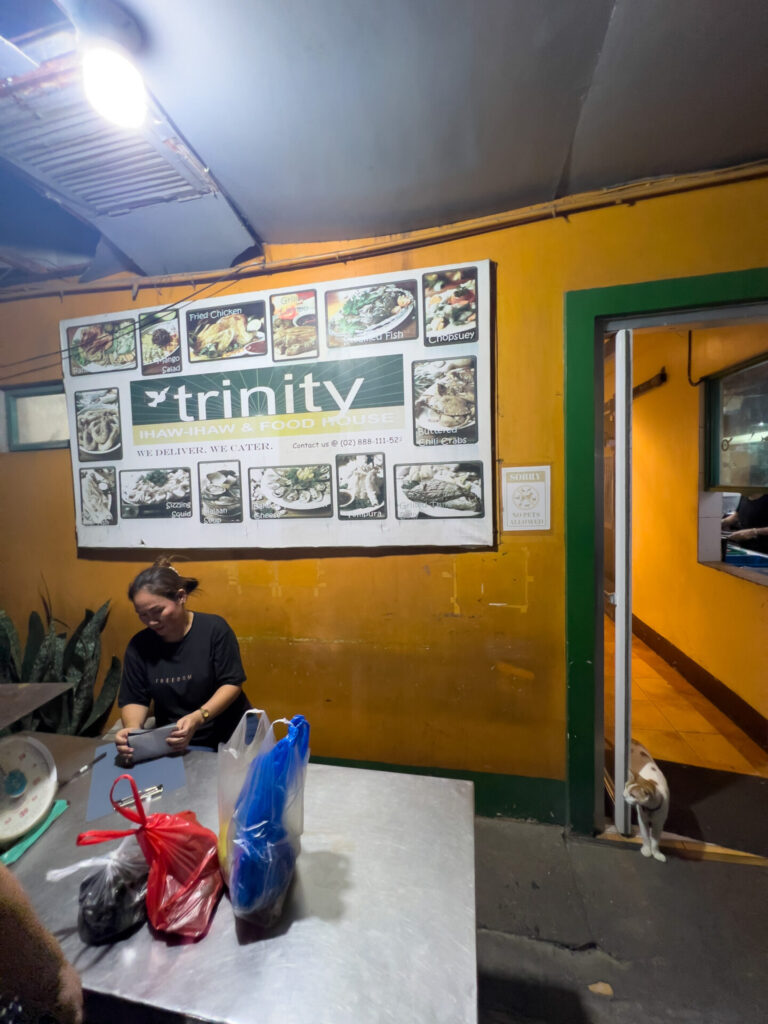
We handed our market haul to Trinity Ihaw-Ihaw & Food House, one of the many dampa seafood spots in the complex. We didn’t look at the menu. No predetermined portions. Just “here’s what we bought, cook it however you think is best.” They charged a cooking fee per dish which was reasonable, considering they’re transforming your raw ingredients into masterful dishes.
The beauty of dampa Filipino food is the customization. Want your prawns drowned in garlic butter? Done. Prefer your crab in spicy chili sauce? No problem. Grilled fish with just salt and toyomansi? They’ve been doing it that way for decades.
What We Ate
My dampa experience was a baptism by fire. Or maybe seawater.
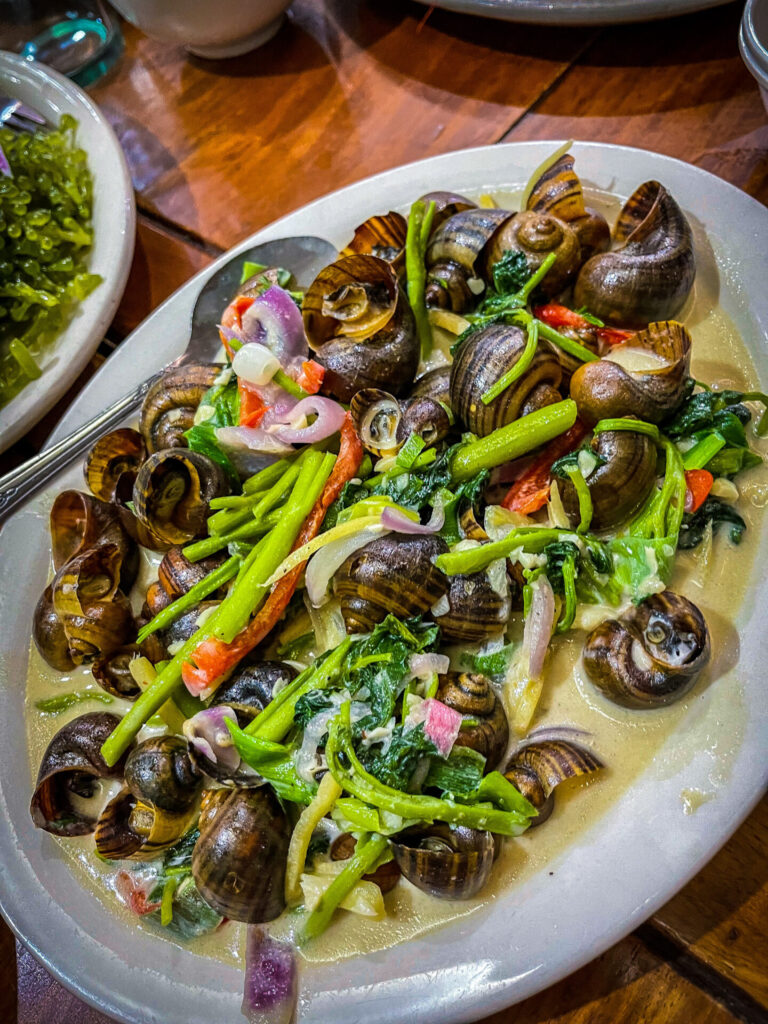
Kohol (apple snails) appeared first. Chewy, unfamiliar, swimming in lemongrass-coconut milk broth that reminded me of Caribbean conch soup but with a distinctly Filipino twist. This wasn’t something I’d seen on any “dampa seafood” recommendation list, but I insisted being that I never had tried any form of snail before.
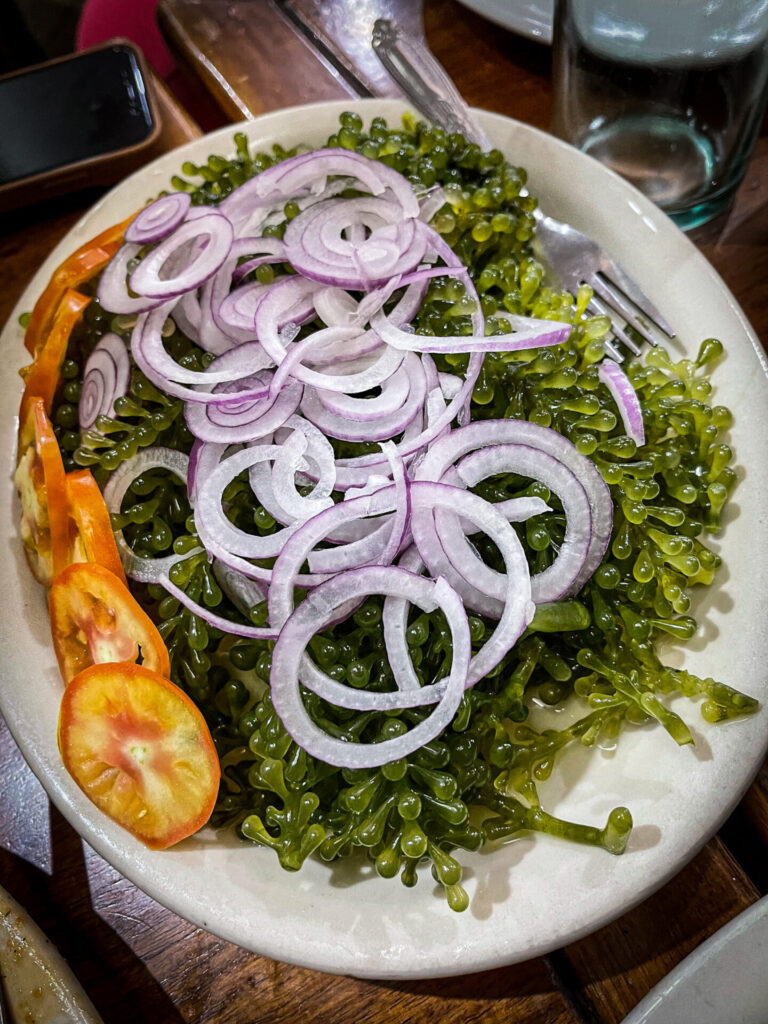
Sea grapes came next. Lato, as the locals call it, a seaweed that looks like tiny green bubbles. You pop them in your mouth and they burst with briny seawater, each one a small detonation of ocean flavor. Simple. Exotic. Addictive.
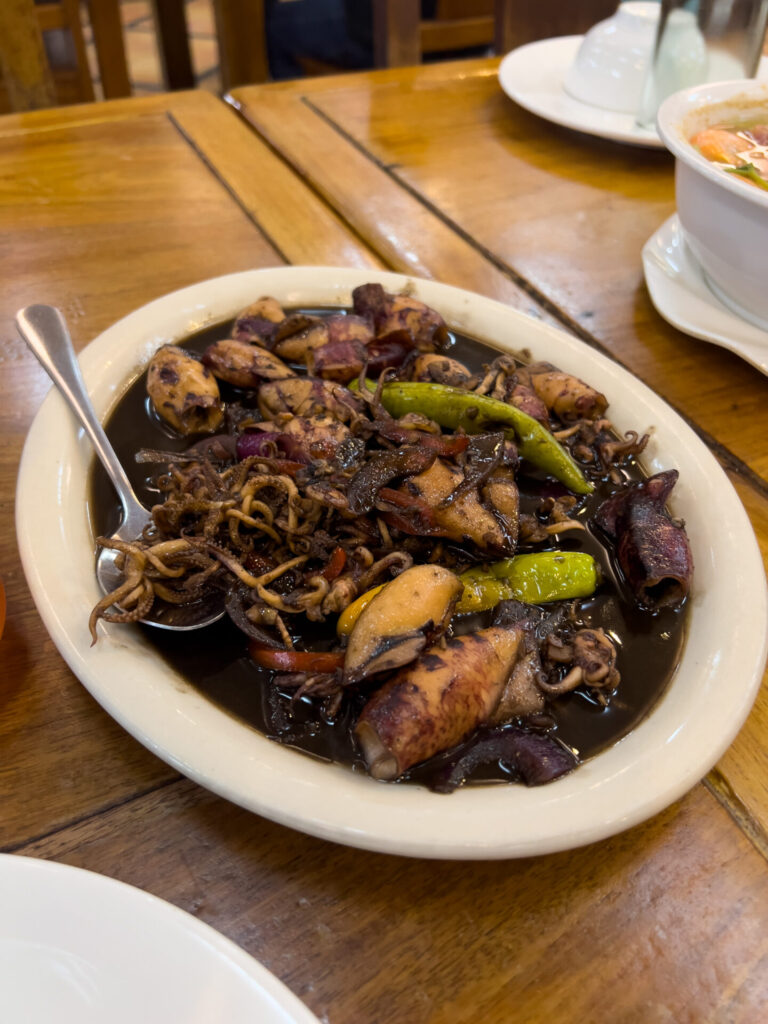
Squid adobo arrived shortly after, dark and glistening, the ink so black it looked like it had been painted on. The freshness was undeniable as this squid had been alive hours ago, maybe less. Meanwhile, the adobo treatment (vinegar, soy sauce, garlic, bay leaves) cut through the richness, the ink providing an almost sweet earthiness that made the dish more than the sum of its parts.
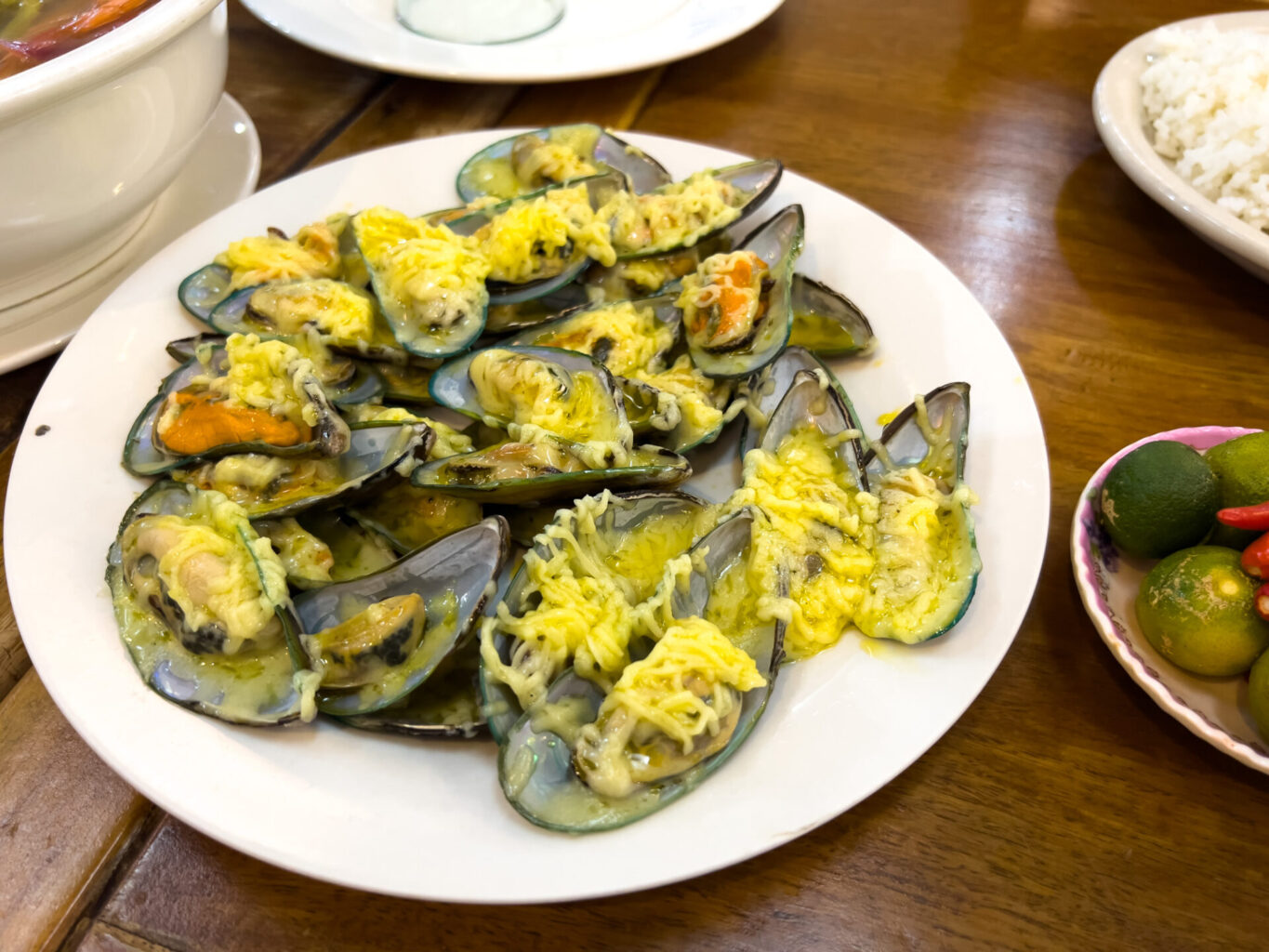
Cheesy garlic baked tahong (mussels) were exactly what they sounded like—mussels topped with melted cheese and enough garlic to ward off vampires for a week. Not traditional, not subtle, but absolutely correct for what they were trying to be.
Deep-fried maya-maya (red snapper) came out golden and crackling, so fresh it tasted more like the sea than like fish. We dipped it in toyomansi (the DIY sauce of soy sauce, vinegar, calamansi, and chili that appears on every Filipino table) and it was perfect. Sometimes the simplest preparations are the most elegant.
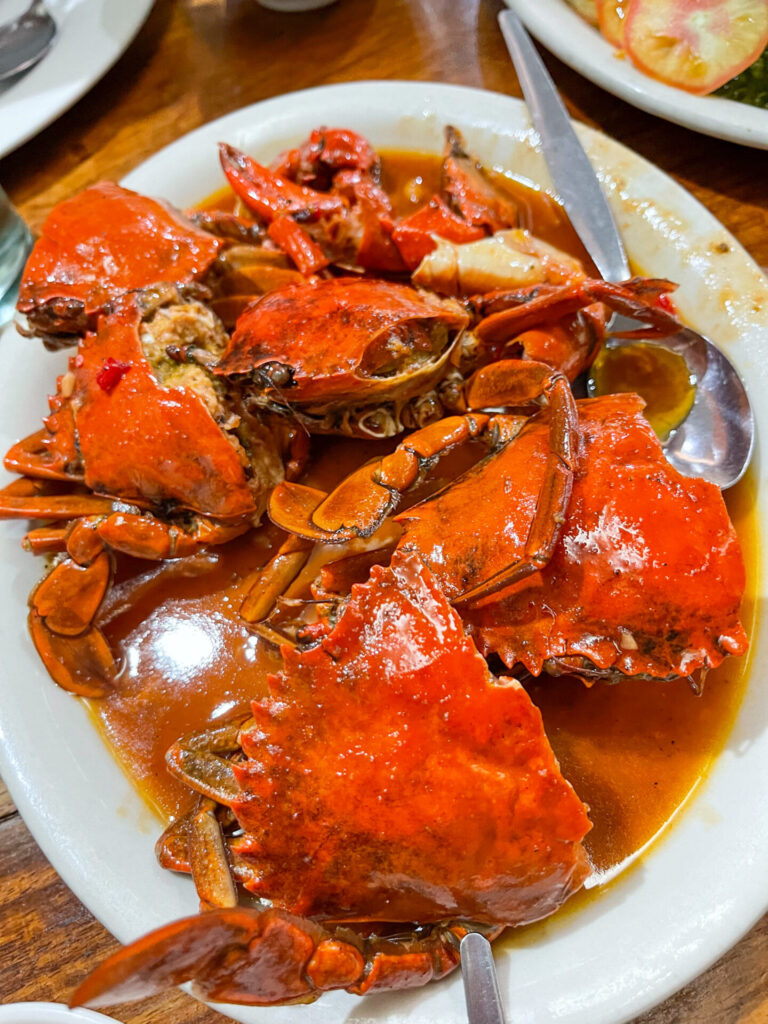
Finally, chili crab was messy, spicy, required hand-eating and zero dignity. The kind of dish that reminds you why people invented wet wipes. However, the crab itself was sweet and delicate, the chili sauce aggressive enough to make your nose run but not so hot that it obliterated the seafood flavor.
What You Need to Know About Dampa Pricing
People always ask about dampa lobster price or dampa seafood price like there’s a fixed menu. There isn’t. Prices fluctuate based on what’s available, what’s in season, and how well you negotiate. Vendors will quote you a price. You’ll counter with something lower. They’ll act offended. You’ll walk away. They’ll call you back with a better price. It’s theater, and everyone knows their role.
The cooking fee at dampa restaurants is separate, usually a fixed amount per dish or per kilo of seafood. Factor both the market price and the cooking fee when budgeting. And bring cash. Lots of cash. Credit cards don’t really exist in this economy.
Why Dampa Matters
Dampa Seaside Macapagal restaurants and other paluto spots like Roadside Dampa or the various Dampa seafood branches scattered around Metro Manila represent something important: a food culture that refuses to be sanitized or commodified. This isn’t farm-to-table fine dining with a carefully curated aesthetic. This is market-to-mouth eating where the fish was swimming this morning and you’re eating it tonight.
The Verdict
My first day in Manila, jet-lagged and disoriented, eating kohol and sea grapes and squid so fresh it still tasted like the ocean—that’s the meal I remember years later. Not the fancy restaurants in BGC, not the hotel breakfast buffets, not the trendy fusion spots in Makati. Instead, the dampa.
Because the best food isn’t always the most refined. Sometimes it’s the messiest, the most chaotic, the least photogenic. Other times, it’s just incredibly fresh seafood cooked simply by people who know what they’re doing, eaten with your hands while fish vendors shout prices twenty feet away and the smell of the sea hangs in the air.
That’s dampa. That’s why it matters. And ultimately, that’s why, if you’re in Manila and you want to understand Filipino food culture, you skip the restaurants with tablecloths and air conditioning. Instead, you go straight to Macapagal Seaside Market with an empty stomach and an open mind.
Restaurant Info
| Dampa Seaside Market |
| Diosdado Macapagal Avenue |
| Barangay 76 Pasay City, 1300 |
| Pasay City, Metro Manila, Philippines |
Read More About Our Filipino Food Experiences
- Top 16 Food Finds in Siargao Island
- Surigao City BBQ: Where the Chicken Sings and your Tastebuds Dance
- My Experience With The Famous Filipino Lechon
So, have you been to a dampa? What hidden gems did you discover? Let me know your thoughts and recommendations in the comments below!